Responsibility & Sustainability

AIBA's commitment

Responsible consumption at the heart of everything we do

The All India Brewers Association is committed to promoting responsible consumption of beer while supporting a balanced and informed approach to alcohol awareness in India. As a relatively low-alcohol beverage, beer can play a constructive role in encouraging moderation when consumed responsibly by legal-age adults.

AIBA actively supports initiatives that promote responsible drinking, consumer education and adherence to legal drinking age norms. The association believes that a well-informed, responsibly consuming adult population is both the right outcome and the long-term foundation of a sustainable beer industry in India.

5–8%

Beer alcohol by volume — significantly lower than spirits

LDA

Legal drinking age in most states — AIBA strictly upholds this norm

Moderation

The central message of all AIBA consumer awareness activity

Beer vs other beverages — ABV comparison
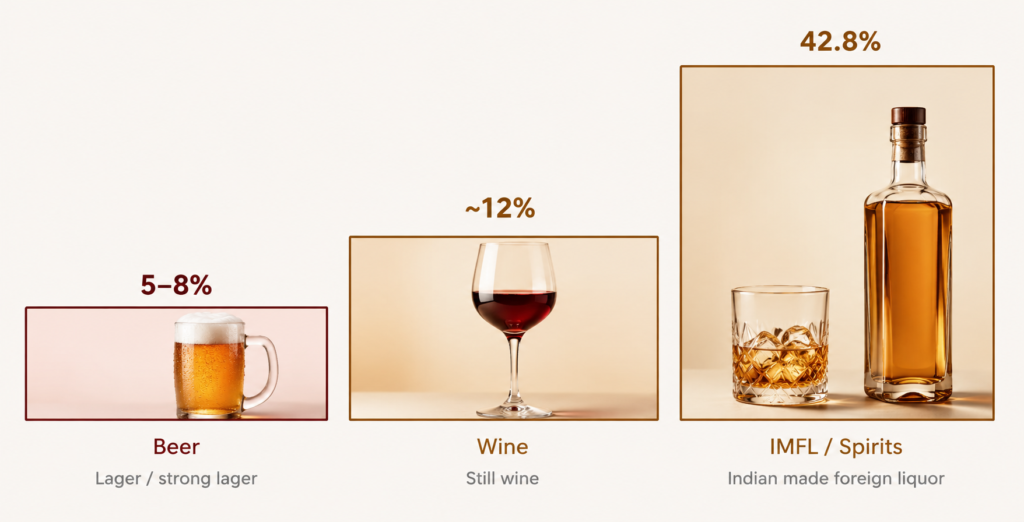
Beer’s lower ABV makes it a more moderate choice for adult consumers. AIBA advocates for rational regulation and taxation that reflects this distinction — encouraging adults toward lower-alcohol options rather than higher-ABV spirits.

Responsible consumption at the heart of everything we do

Drinking in moderation:

Consumption in reasonable quantities, on appropriate occasions, by legal-age adults

Never drink and drive:

Active support for road safety messaging and zero tolerance for drink-driving

Avoiding intoxication:

Consumer awareness on recognising personal limits and avoiding excessive consumption

AIBA and its member organisations maintain strict adherence to legal drinking age norms across all states and jurisdictions. No marketing, promotion, communication or activity carried out by AIBA or on behalf of its members shall be directed at individuals below the legal drinking age.

AIBA Code of Business Conduct & Ethics

Public awareness

Informed consumers make better choices

AIBA promotes informed understanding of beer as a low-alcohol beverage through education, awareness and responsible communication. The association supports initiatives that highlight beer's agricultural origins, brewing process, responsible consumption practices and the distinction between beer and higher-ABV drinks — with the goal of fostering a balanced, informed and responsible drinking culture in India.

Factual information

Providing accurate data on beer's alcohol content, brewing process and agricultural origins to counter misconceptions and support informed consumer choices

Addressing misconceptions

Working to address the incorrect but prevalent perception that beer is in the same risk category as high-ABV spirits, particularly in the Indian regulatory context

Industry collaboration

Collaborating with member companies, government bodies and civil society to develop and disseminate responsible consumption messaging across appropriate channels

AIBA's commitment

Building a sustainable beer ecosystem for India

AIBA encourages sustainable brewing practices across the industry, including responsible water usage, energy efficiency, sustainable sourcing of raw materials, waste reduction and environmentally responsible packaging. AIBA and its members remain committed to contributing positively to the communities in which they operate.

Brewing is fundamentally an agricultural industry — beer is made from barley, water, hops and yeast. This connection to land, water and community makes environmental stewardship not just a responsibility but a business imperative for every brewery in India.

Water

Primary resource in brewing — stewardship is a core industry priority

Barley

Key agricultural crop linking the industry to farming communities

Local

Breweries operate close to their markets — creating community impact

Water — the most critical resource in brewing

Water is the primary ingredient in beer, comprising over 90% of the final product. AIBA encourages member breweries to adopt responsible water usage practices, invest in effluent treatment, pursue water recycling and conservation initiatives, and engage actively with local water management authorities to reduce the environmental footprint of brewing operations.

Responsible usage:

Minimising water consumption per unit of beer produced through process efficiency and technology adoption

Effluent treatment:

Investment in wastewater treatment facilities to ensure brewery effluent meets applicable environmental standards before discharge

Water recycling:

Recirculating treated water within brewery processes where feasible to reduce overall freshwater consumption

Community water sharing:

Engaging constructively with local communities and authorities on shared water resource management in water-scarce regions

Energy efficiency

Brewing is an energy-intensive process. AIBA encourages member breweries to invest in energy-efficient equipment, recover heat from brewing processes, adopt renewable energy sources where feasible and set measurable energy reduction targets across their operations.

Emissions reduction

Members are encouraged to measure and manage greenhouse gas emissions from brewing operations and associated logistics. AIBA supports industry-wide efforts to reduce the carbon footprint of Indian brewing through technology, process improvement and cleaner energy adoption.

Agricultural linkage

From barley field to bottle

Beer's primary raw material — barley — is grown across several states in India including Rajasthan, Uttar Pradesh, Haryana and Madhya Pradesh. The brewing industry has a direct and significant relationship with India's agricultural sector. AIBA encourages member breweries to source raw materials responsibly, develop long-term procurement relationships with farming communities and support agricultural quality improvement initiatives.

Barley cultivation

Supporting Indian barley farmers through long-term procurement commitments, quality improvement programmes and fair-price agreements that provide income stability

Malt quality

Encouraging domestic malt manufacturing to reduce import dependence and strengthen India's agro-processing sector — creating value at multiple points in the agricultural chain

Supply chain responsibility

Responsible sourcing across the full supply chain — including hops, adjuncts, packaging materials and process chemicals — with a focus on reducing environmental impact

Packaging responsibility

Sustainable packaging choices

Increased use of returnable glass bottles to reduce single-use packaging

Lightweighting of packaging materials to reduce raw material consumption and transport emissions

Adoption of recyclable and responsibly sourced packaging materials

Waste management

Responsible disposal and treatment of brewing by-products including spent grain and yeast

Compliance with all applicable waste management regulations and pollution control standards

Exploring circular economy opportunities — spent grain is widely used as animal feed and compost

AIBA and its members remain committed to contributing positively to communities, supporting agricultural linkages such as barley cultivation and fostering a responsible, transparent and socially conscious beer ecosystem in India.

AIBA — Responsibility and Sustainability commitment

Community impact

Contributing to the communities we operate in

Agricultural communities

Breweries provide a sustained market for barley farmers across multiple Indian states. AIBA encourages members to invest in agricultural development programmes, support farmer training and contribute to crop quality improvement — creating economic value at the farm level.

Local employment

Breweries are significant local employers in the regions where they operate — providing direct employment in manufacturing and indirect employment across logistics, hospitality, retail and allied industries. AIBA recognises this community role as a core part of the industry's social contribution.

Constructive community engagement

Member companies are expected to engage constructively with the communities in which they operate — on local environmental concerns, water usage, employment practices and any local social or infrastructure issues that the brewery's operations may affect.

Transparency and reporting

AIBA encourages members to maintain transparent communication on their sustainability practices and community contributions — supporting public trust in the industry and contributing to AIBA's credibility as an institutional voice.